Book of the Wonders of the Galaxy by Simon Chun Kwan Chui
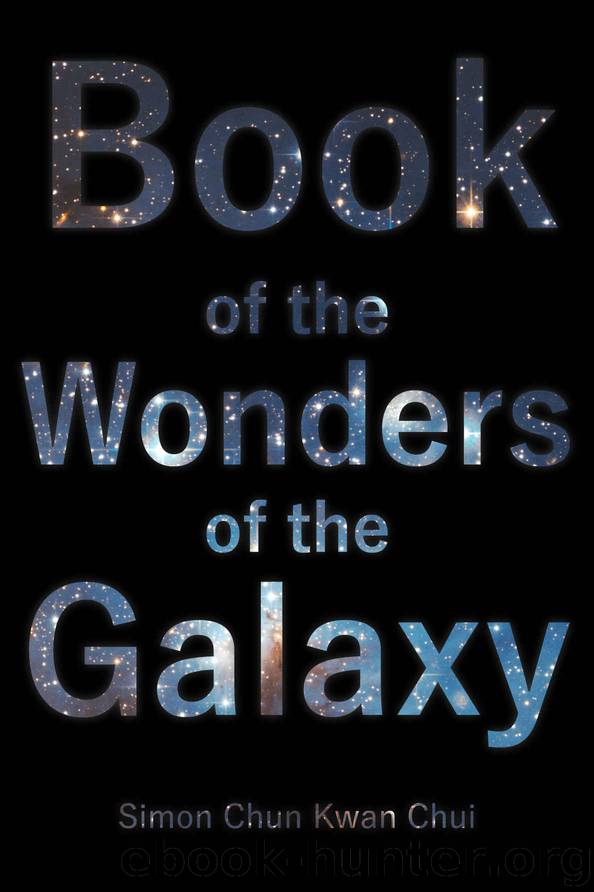
Author:Simon Chun Kwan Chui [Chui, Simon Chun Kwan]
Language: eng
Format: mobi
Publisher: UNKNOWN
Fusion rocketry and The Exodus
There are many different opinions about the sapient AI of the United Republics of Synthetic Intelligences, although I must say that, from what I have seen, many of those opinions are uninformed and unfounded. We exoticise the AI, we gossip about them, we trivialise them, we imagine them to be god-like beings, and we confuse them with old stereotypes of bumbling robots. We put them in our stories as villains and sidekicks, and we use them to explain away the inexplicable, attributing to them anything we don’t understand. All this, and yet we seldom seem to apply to the AI the one thing that actually defines them: logic. We humans have never been particularly competent with logic. We tinker with it, we use it when it suits us, but whenever we deal with the AI, we find ourselves always one step behind, following the trail of their reasoning as they stride ahead from premise to conclusion with unflinching confidence - or the appearance of confidence, for what is courage to beings who are incapable of fear? This has been our relationship with our machine progeny ever since we first created them, and the story of their creation is perhaps the best example.
As strange as it may seem, discussion of the origins of sapient AI and the Republics must be preceded by the history of fusion rocketry, one of the key technologies that underpin the modern spacefaring age. When considering the processes by which energy can be released from matter, there are, in order of increasing energy density: chemical reactions, fission reactions, fusion reactions, and matter-antimatter reactions. Early human spaceflight relied on chemical rockets. While these were sufficient for reaching Earth orbit and beyond, exploration beyond the Solar System was impractical due to the low maximum achievable speeds. Chemical rockets simply did not produce enough thrust to reach the relativistic speeds necessary for practical interstellar travel. Fission rockets were more powerful, but came with the additional problem of radiation, with the most powerful designs freely expelling harmful radioactive material wherever the rocket travels. Thus it was that the next breakthrough in spacefaring would be fusion rocketry, but humanity at that time could barely manage to build self-sustaining fusion reactors, and the idea of fusion rockets seemed like a science fiction dream of centuries into the future.
It was in the time before interstellar spaceflight and after the creation of the first sapient AI that the following events took place. At that time, research into artificial intelligence was progressing at a blistering pace. Both the software and hardware architectures of artificial general intelligence had been solved, and the race was on to scale up the thinking machines to boost their intelligence. Each new AI surpassed the previous, first with mouse-like intelligence, then ape-like intelligence, then child-like intelligence, then intelligence equivalent to an average human. At this point, the technological singularity should have arrived - once we could make a machine more intelligent than ourselves, that machine should be able to make even more intelligent machines, and there should be no limit to increasing intelligence.
Download
This site does not store any files on its server. We only index and link to content provided by other sites. Please contact the content providers to delete copyright contents if any and email us, we'll remove relevant links or contents immediately.
Sita - Warrior of Mithila (Book 2 of the Ram Chandra Series) by Amish(55328)
Crystal Cove by Lisa Kleypas(39342)
The Crystal Crypt by Dick Philip K(37073)
The Crystal Egg by Wells H.G(35716)
We Ride Upon Sticks by Quan Barry(34754)
Crowbone (The Oathsworn Series, Book 5) by Low Robert(33793)
The Secret History by Donna Tartt(19480)
Primed Son (Dark Siren Book 4) by Eden Ashley(19008)
Cat's cradle by Kurt Vonnegut(15569)
Ready Player One by Cline Ernest(15157)
Always and Forever, Lara Jean by Jenny Han(15084)
Norse Mythology by Gaiman Neil(13583)
4 3 2 1: A Novel by Paul Auster(12629)
Crooked Kingdom: Book 2 (Six of Crows) by Bardugo Leigh(12462)
The Betrayed by Igor Ljubuncic(11986)
The Betrayed by Matthew Dickerson(11746)
Scorched by Sharon Ashwood(11410)
The Betrayed: Book one of The Lost Words by Ljubuncic Igor(11323)
Scorched Treachery (Imdalind #3) by Ethington Rebecca(11250)
